Oct 29, 2019

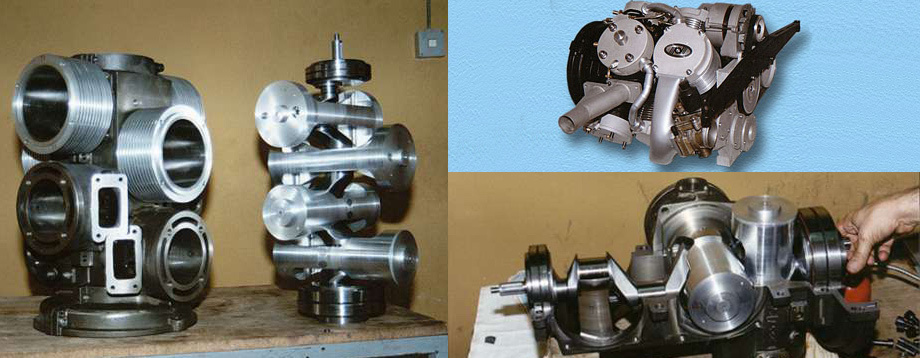
Libralato pistonless Engine

"The asymmetrical rotary engine is exceptionally compact, powerful, efficient, low emissions, low production and maintenance costs, low vibration and low noise."


Video

Youtube (link)
Patents: (link)
Company: (link)
Pistonless engine Wikipedia (link)

Oct 27, 2019

Otto & Langen Engine


It's a legend.


Full size reproduction of Otto & Langen first engine. The  first engine introduced in 1867.

More: Google link

Mahle waste heat engine (orc)

Alte Kolbenmarke MAHLE.
Old piston mark Mahle.


Diesel waste heat recovery system. 

Piston "orc motor"

Video

More: Google (link) 
Company: MAHLE konzern (link)
ORC system Wikipedia (link)
Science: (link)
Patents: (link)
Eff: Carnot 

Paut-motor

"Paut Motor Prototype, Revolutionary Engine made in Split - Croatia by Drazen Paut.
This prototype is an engine with two-sided pistons, positioned at 90 degrees to each other, combined with PAUT two-stroke cycles. This construction provides a simple engine with less assembling parts, and smaller mass to power and overall dimensions to power ratios, which lead to lower cost of exploitation."


Video: Paut-tweetaktmotor is ideale verbrandingsmotor?


Inventor: Drazen Paut 
Patents: (link)
More: (link)
More (Google) : clic

Jul 30, 2019

Kamenov reciprocating engine (2015)

Kamenov Rotary Reciprocating Internal Combustion Engine.


Running prototype


More: (Link)
US Patent 8230836 (link) Contact: kamengeorge@gmail.com

Jul 11, 2019

Steam-Diesel hybrid

Year 1917.
 "He explained how the reserve of energy represented by the steam pressure in the boiler provided for any occasional overload which would defeat a standard internal combustion engine of the same power.[1] Independent heating of the boiler was occasionally used, to provide extra power for exceptional conditions, and in the first stage of operation to allow the engine to start itself from steam power alone, even against a load."


Steam Diesel hybrid locomotive


"The cylinders were made double-ended, with the rod end of each cylinder for steam and the closed end fitted with a diesel injector" "The sequence of operation was to heat the boiler in the normal way, but using fuel oil instead of coal. The start from rest would be made with steam power, but at about five mph (8 km/h) the diesel injectors would be started and the steam turned off. The waste heat from the cylinder jackets and diesel exhaust then maintained the boiler in steam for auxiliary functions (brakes and whistle) and in readiness to supplement the diesel power if required, or for the next start" (link)


Inventor:  William Joseph Still
The engine : (link)

More about the steam-diesel hybrids:


Pict: Charles T Denker`s patent, 1954. Combined Diesel and steam engine

Steam-diesel hybrid (Wikipedia)
Kitson-Still Steam-Diesel Locomotive (douglas-self.com)
Science: (link)
Patents: (link) (link2)
Startups: ??

Jul 8, 2019

Most efficient internal combustion engines in the world.

Over 50 % eff.  Diesel


-Rolls Royce the LNG-fueled B36:45 big ship engine

-Wärtsilä 31SG big ship engine (4-stroke)
-Wärtsilä-Sulzer RTA96-C turbocharged 2-stroke Diesel
-MAN B&W G70ME Big ship engine (manufactured in China)


Wärtsilä


Some of smaller best eff. engines

-Mercedes F1 Engine - 1,6-litre V6 Turbo (>%50)
-Toyota  2,8-litre diesel  “1GD-FTV”, efficiency of 44%. 


Toyota


---------------------------------------------------------------


Some funny and primitive: Old Wärtsilä start up without exhaust pipe.

Jul 3, 2019

History of heat engines

History of heat engines
--Not perfect, edited mainly from Wikipedia-- 

450 BC - Archytas of Tarentum used a jet of steam to propel a toy wooden bird suspended on wire.
50 AD - Hero of Alexandria's Engine, also known as Aeolipile.
10th century - China develops the earliest fire lances which were spear-like weapons combining a bamboo tube containing gunpowder and shrapnel like projectiles tied to a spear.
12th century - China, the earliest depiction of a gun showing a metal body and a tight-fitting projectile which maximises the conversion of the hot gases to forward motion.
1125 - Gerbert, a professor in the schools at Rheims designed and built an organ blown by air escaping from a vessel in which it was compressed by heated water.
1232 - First recorded use of a rocket. In a battle between the Chinese and the Mongols.
1500 - Leonardo da Vinci builds the Architonnerre, a steam-powered cannon.
1543 - Blasco de Garay, a Spanish naval officer demonstrates a boat propelled without oars or sail that utilised the reaction from a jet issued from a large boiling kettle of water.
1551 - Taqi al-Din demonstrates a steam turbine
1629 - Giovanni Branca demonstrates a steam turbine.
1665 - Edward Somerset, the Second Marquess of Worcester builds a working steam fountain.
1680 - Christiaan Huygens publishes a design for a piston engine powered by gunpowder
1690 - Denis Papin - produces design for the first piston steam engine.
1698 - Thomas Savery builds a pistonless steam-powered water pump
1707 - Denis Papin - produces design for his second piston steam engine
1712 - Thomas Newcomen piston-and-cylinder steam-powered water pump for pumping water out of mines.
1748 - William Cullen first artificial refrigeration in a public lecture at the University of Glasgow
1769 - James Watt patents his first improved atmospheric steam engine
1791 - John Barber patents the idea of a gas turbine.
1799 - Richard Trevithick  the first high pressure steam engine..
1807 - Nicéphore Niépce installed his 'moss, coal-dust and resin' fuelled Pyréolophore internal combustion engine in a boat and powered up the river Saone in France.
1807 - Franco/Swiss engineer François Isaac de Rivaz built the De Rivaz engine.
1816 - Robert Stirling, Stirling engine.
1834 - Jacob Perkins,  patent for a vapor-compression refrigeration system.
1859 - Etienne Lenoir. first commercially successful internal combustion engine.
1861 - Alphonse Beau de Rochas  four-stroke internal-combustion engine .
1861 - Nikolaus Otto patents a two-stroke internal combustion engine building on Lenoir's.
1872 - Pulsometer steam pump, a pistonless pump, patented by Charles Henry Hall.
1873 - Sir William Crookes invents the light mill
1877 - Nikolaus Otto patents a practical four-stroke internal combustion engine (U.S. Patent 194,047)
1883 - Samuel Griffin of Bath UK patents a six-stroke internal combustion engine.
1884 - Charles A. Parsons builds the first modern Steam turbine.
1886 - Herbert Akroyd Stuart builds the prototype Hot bulb engine
1892 - Rudolf Diesel patents the Diesel engine (U.S. Patent 608,845)
1913 - Nikola Tesla patents the Tesla turbine based on the Boundary layer effect.
191x -Steam-Diesel hybrid (link)
1926 - Robert Goddard of the USA launches the first liquid fuel rocket.
1929 - Felix Wankel patents the Wankel rotary engine (U.S. Patent 2,988,008)
1930 - Sir Frank Whittle  gas turbine for jet propulsion.
1933 - French physicist Georges J. Ranque invents the Vortex tube
1937 - Hans von Ohain builds a gas turbine
1940 - Hungarian Bela Karlovitz  magnetohydrodynamic generator.
1942 - R.S. Gaugler, Heat pipe,
1950 - The Philips company develop the Stirling-cycle generator.
1959 - Geusic, Schultz-DuBois and Scoville  quantum heat engine
1962 - William J. Buehler and Frederick Wang  Nitinol  engine
1992 - The first practical magnetohydrodynamic generators are built in Serbia and the USA.
1996 - Quasiturbine engine patented
2011 - Michigan State University, wave disk engine.

Some tiny or nano heat engines


World's 'smallest steam engine' built in Germany


- Themicroscopic model was based on a 195-year-old design by the inventor Robert Stirling.
"Nowadays everybody is trying to make things smaller - electronic circuits and mechanical devices get smaller and smaller - so we thought why not try to investigate this basic process at a micro-scale."

More: (Link)
----------------------------------------------


Tiny heat engine may be world's smallest


"The basis of the heat engine is a solid piece of micrometer-sized silicon crystal that has two short beams jutting out from one end. When 1.2 milliamps of DC current is applied to one of the beams, the beam heats up as a consequence of its , and expands due to thermal expansion."
More: (Link)
----------------------------------------------
Graphene enables world's smallest heat engine, may power future nano robots

"The new nano-engine is made of graphene and weakly chemisorbed ClF3 molecules. The CIF3 molecules are used as actuators. The engine uses a laser light beam as the “ignition plug” - when the CIF3 molecules are exposed to the laser (532 nm wavelength) they sublimate - which expand the volume at the interface between the graphene and the substrate it is grown on. This generates a high pressure (around 23 MPa) and creates a "dome-like blister". The expansion (and later contraction when the laser is turned off) is equivalent to the motion of a piston in an internal combustion engine. The blister size can be controlled by changing the laser power."

More: (Link)

---------------------------------------------

Single atom engine

"The new device makes far too little power to supply us with energy anytime soon. But Jacob Taylor, a physicist at the National Institute of Standards and Technology in Gaithersburg, Maryland, says it provides experimental data for "a quiet revolution” in statistical physics, the study of how heat flows both in microscopic systems and on the scale of everyday life."
More: (Link)
-----------------------------------------------

A quantum-dot heat engine operating close to the thermodynamic efficiency limits

"PE heat engine based on a quantum dot (QD) embedded into a semiconductor nanowire."

More: (Link)
Wiki, Quantum engines (Link)
Patent: (Link)

Jul 2, 2019

Mazda: 14:1 compression ratio and 56 percent thermal efficiency ?

Mazda hopes to achieve 56 percent thermal efficiency with the Skyactiv-3 gasoline engine. That would make it the most efficient internal-combustion car engine in history. 

"diesel compression ratio in gasoline engine makes efficiency"


"If Mazda can make a mass-production internal-combustion engine that achieves more than 50 percent thermal efficiency, it will be an incredible feat—and would likely help guarantee the piston engine's continued survival."


Wikipedia: (link)
Science: (link)
Eff: Carnot
Video: (link)

The novel heat-to-electricity converter


UP-THERM engine -For a two-phase thermofluidic-oscillator engine


"Innovative high efficiency phase change fluid based waste heat engine"


"Exergy efficiency‎: ‎11.2%
 Power output‎: ‎2.64 kW
Thermal efficiency‎: ‎6.18%"


Final Report Summary - UP-THERM (Innovative high efficiency phase change fluid based heat engine) (link)
Working fluid selection for a two-phase thermofluidic oscillator: Effect of thermodynamic properties (link)

https://www.mdpi.com/1996-1073/11/1/154/htm

Apr 11, 2019

REC engine (Idea)

This seems to be just an idea.

"The technology behind the REC has a simple concept yet so innovative and powerful. The REC is an active heat exchanger which transforms a part of the heat to pressure pulses of a desired frequency. These can be used different ways to generate work (connecting to a piston engine, a turbine, a pump, an electricity generator…).

In thermodynamic terms, the REC acts as “a closed system with a moving boundary” that transforms an existing given temperature difference into kinetic energy which can connect to an electric generator."


More: https://www.nilsinside.com/nilsinside/Technology-EN.html

Mar 30, 2019

Ericsson caloric cycle and engine

"The Ericsson cycle is named after inventor John Ericsson (July 31, 1803 – March 8, 1889). He is credited with inventing two unique heat engine cycles and developing practical engines based on these cycles. His first cycle is now known as the closed Brayton cycle, while his second cycle is what is now called the Ericsson cycle. Ericsson is one of the few who built open-cycle engines, but he also built closed-cycle ones."

Videos: 
Rider Ericsson engine

Ericsson caloric engine


Ericsson 8" engine


More:
Ericsson (link)
Ericsson cycle (link)
Ericsson motor (Deutsch)
Ericsson engine III (link)
Patents and other patents (link)
Science (link)

Mar 14, 2019

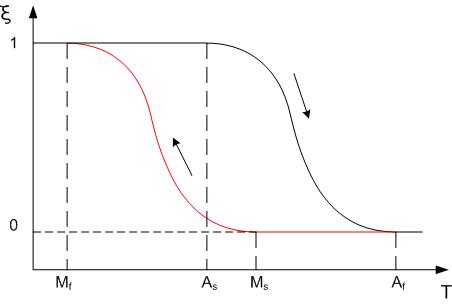
Old McDonnel Douglas Nitinol engine, memory metal turns heat to work

Kuvahaun tulos haulle nitinol engine wiki


(It`s not 5 Megawatts)


More:

https://www.scientificamerican.com/article/shape-shifting-metals-could-generate-electricity-from-wasted-heat/

Nitinol is Nickel Titanium (link)
Memory metal (link)

Z-motor using Atkinson cycle


•4/2-stroke, 2-cylinder engine
•Revolutionary work principle combines the best aspects of 2- and 4-stroke engines
•Part of the compression cycle is made outside of the working cylinder, so all of the cycles of 4 stroke engine can be done in a single crankshaft rotation

More:

http://www.aumet.fi (Link)
Atkinson cycle: (Link)
Science: (Link)

Feb 13, 2019

Combustion: Slow motion videos

What happens inside the engine?

Short slow motion of Diesel:

Another good Diesel video

Wankel

4-stroke gas

Jet engine combustion chamber

Glass cylinder 

Four stroke gas, glass wall cylinder. Nice!

Fluid dynamic in engine

Direct Injection Visualisation using Optical Research Engine


Old Bricks&Stratton, 4-Stroke gas

2-Stroke moped:

Rotary Steam Engine


Different versions of the steam engine..


This is nice!


Special expansion geometry


Very old and special construction, James Rumsey

Johnsson`s engine


More:
http://www.douglas-self.com/MUSEUM/POWER/rotaryengines/rotaryeng8.htm
https://jamesrumsey.org/rumseys-1791-rotary-steam-engine/

Patents and pictures: (link)
Efficiency: 0,1-0,3 (Carnot)
Startups: Yes, Solar power and waste heat sector.
Science: (link)